

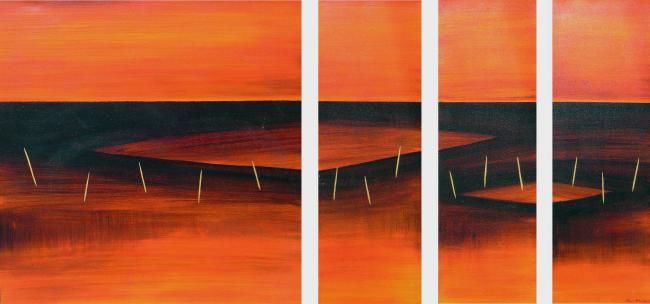
For many artists, painting begins as a childhood pastime before gradually becoming a lifelong calling. For Dewa Rai, however, art was never simply a hobby—it was a natural part of who he was. From his earliest years in Bali, he felt an instinctive connection to painting, long before he fully understood what it meant to become an artist. Today, his expressive works reflect a profound fascination with color, spirituality, and the cultural philosophy of his homeland, creating paintings that celebrate the emotional and symbolic power of visual expression.
Born on November 12, 1980, in Denpasar, Bali, Indonesia, Dewa Rai grew up on an island where art and spirituality are inseparable from everyday life. Bali is renowned for its vibrant traditions, temple ceremonies, and artistic communities, offering countless sources of inspiration for young creatives. Surrounded by this rich cultural environment, Dewa discovered painting at an early age, finding joy in drawing and experimenting with colors long before art became his profession.
As a child, painting quickly evolved from a simple pastime into a true passion. One memory remained especially meaningful throughout his life. His mother once asked him whether he wanted to become an artist. Without fully understanding the significance of the profession, he immediately answered “yes.” Although he was too young to grasp everything the word represented, he already sensed that creating art was something deeply connected to his identity. Looking back, that spontaneous response seems to have foreshadowed the direction his life would eventually take.
After completing his education at a technical and mechanical school in Denpasar, Dewa faced an important decision about his future. While his studies provided practical knowledge and technical skills, his heart remained firmly devoted to painting. Determined to pursue his creative ambitions, he chose to move to Ubud, Bali’s internationally celebrated center for art and culture.
The move to Ubud became one of the defining moments of his artistic journey. Known for its lush tropical landscapes, vibrant artistic community, and deeply spiritual atmosphere, Ubud offered an environment where creativity could flourish naturally. Surrounded by galleries, studios, temples, and fellow artists, Dewa found both inspiration and encouragement to dedicate himself fully to developing his artistic practice.
Living in Ubud also allowed him to experiment freely with different techniques and materials. Rather than limiting himself to a single method of painting, Dewa approached every canvas as an opportunity to explore new possibilities. Through continuous experimentation, he refined his artistic language while searching for ways to communicate emotion, spirituality, and personal experience through visual form. This openness to discovery remains one of the defining characteristics of his work.
Among all the elements of painting, color has become the foundation of Dewa Rai’s artistic philosophy. While many artists use color primarily for visual balance or realism, Dewa considers it a living language with profound emotional and spiritual significance. His paintings are built around carefully considered color relationships that do more than create beauty—they communicate ideas, energy, and meaning.
This understanding of color is deeply rooted in Balinese spiritual philosophy. Within Balinese Hindu traditions, colors are closely associated with divine forces and symbolic meanings. Every deity is connected to a particular color, and each color carries spiritual significance that extends beyond its visual appearance. This philosophy, known as “Pendiger Buana,” has become one of the central inspirations behind Dewa’s artistic practice.
Rather than treating color as a decorative element, Dewa approaches it as a sacred form of communication. Every shade possesses emotional power and symbolic presence, allowing the painting to speak directly to viewers without relying on literal imagery. Through carefully balanced compositions, he seeks to express the invisible relationship between humanity, spirituality, and the natural world, transforming abstract color into a meaningful visual experience.
The spiritual atmosphere of Bali continually reinforces this creative philosophy. Temples, ceremonial offerings, sacred rituals, and traditional beliefs remain visible throughout daily life, creating an environment where spirituality naturally becomes part of artistic expression. For Dewa, painting is not simply an aesthetic activity but a way of engaging with these deeper cultural values and translating them into contemporary visual language.
His paintings often emphasize movement, rhythm, and harmony, allowing colors to interact with one another as if they possess their own living energy. Rather than focusing on precise representation, Dewa encourages viewers to experience the emotional resonance created through color relationships, layered textures, and expressive compositions. This approach gives his work a timeless quality that remains open to individual interpretation.
One of the most striking aspects of Dewa Rai’s artistic personality is the quiet serenity that accompanies his work. Those who meet him frequently notice his calm demeanor and remarkable sensitivity. Despite beginning his professional career at a relatively young age, he demonstrates a maturity and inner balance that naturally extend into his paintings. This peaceful presence becomes visible through compositions that encourage contemplation rather than distraction.
His artistic process reflects this same patience and mindfulness. Every work develops gradually through careful observation, experimentation, and thoughtful refinement. Rather than rushing toward completion, Dewa allows each painting to evolve organically, responding to the emotional direction suggested by color and composition. This intuitive approach creates works that feel authentic and deeply personal.
Throughout his career, Dewa Rai has remained committed to continuous artistic growth. His willingness to explore different materials, techniques, and visual ideas reflects an understanding that creativity is a lifelong journey rather than a fixed destination. While his artistic language continues to evolve, his fascination with the symbolic power of color remains the constant thread connecting every stage of his work.
As a contemporary Balinese artist, Dewa Rai represents a generation that respectfully preserves cultural heritage while embracing personal innovation. His paintings demonstrate that traditional philosophy can continue to inspire modern artistic expression without losing its authenticity or relevance. By transforming spiritual concepts into vibrant visual compositions, he creates work that resonates with audiences both within Bali and beyond.
Today, Dewa Rai continues to dedicate his life to painting, pursuing the passion that first emerged during childhood. Guided by the sacred philosophy of color, the spiritual richness of Bali, and an enduring curiosity for artistic exploration, he creates paintings that celebrate emotion, harmony, and the unseen connections between people, nature, and the divine. Through every canvas, he reminds viewers that color is far more than a visual element—it is a language capable of expressing life itself.